


The star has given the entirety of his £25k Mercury Prize prize money to the trust for venues, which functions to save the Britain's grassroots concert spaces.
Fender was presented with the cheque on 16 October as his latest record the album was chosen as the top album of the last 12 months.
He has opted to hand the money over to the trust, in acknowledgment of the essential function grassroots venues fulfilled in his beginning days.
"I personally couldn't be pursuing my current career if it wasn't for all the performances I played around the area, and elsewhere, when I was beginning," said Sam Fender. "These spaces are iconic, but they are facing challenges."
From early 2023 onward, over 150 of these locations have permanently closed – roughly 16% of the whole industry in the UK.
Over the past year, top acts like Pulp, the group Coldplay, Katy Perry and Ed Sheeran have all supported the Music Venues Trust in its initiatives to support the industry, by adding a minor surcharge to their ticket prices, which supports independent venues.
He also participated, collecting over £100k on his recent tour to support 38 grassroots venues across the UK.
The donation assisted locations that were confronting potential shutdown due to issues arising from flooding, fire incidents and family tragedies, as well as licensing issues, legal disputes and noise complaints.
Other venues obtained funding support in upgrading facilities and technical equipment that positively impacted performers and fans.
"The idea that funds from performances in large arenas backs the smaller venues, where it all starts for performers like me, is just sensible," Fender has commented.
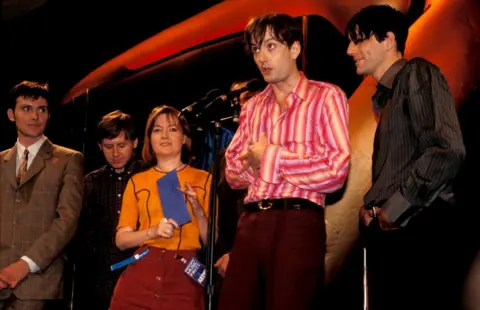
Fender is among several artists to contribute his Mercury Prize funds to good deeds.
Back when Pulp received the prize in the mid-90s for their release the album, lead singer Cocker stated that the band would give their winnings to the organization War Child.
During 2002, artist Ms Dynamite divided her prize between a few good causes, including the NSPCC and a charity for Sickle Cell.
"And I contributed a £1,000 to the center, to their gymnastics program, because I practiced gymnastics when I was a child and they needed new equipment," she shared with a publication.
Previously, the band gave their winnings to the local youth club that developed their band, alongside other grassroots music organisations.
Also 1994 winners the group contributed their winnings to a multiple sclerosis charity after a friend was diagnosed the illness.
"Winning was quite enough," remarked vocalist the singer. "The prize was the cherry on top but we didn't need the extra, because we had the main prize. So our success affected another person's life."
Last week, the trust revealed it had rescued a couple of small stages in the South East, by placing them under community ownership.
The first in the city and The Croft in Bristol were purchased under the community ownership scheme, which is backed by Arts Council England and music fans who buy "ownership units" in the venues.


